Autonomous cars today raise all sorts of questions: regulation, insurance, liability, and a long etcetera. Nevertheless, the United States and Europe are committed to this mobility.
Certainly, the autonomous car has ceased to be a futuristic invention and has become an increasingly present reality today. Manufacturers of these new vehicles announce daily innovations in their prototypes, where they work to achieve the true driverless car. The ultimate goal of these companies is to ensure reliable and safe driving for those who love these cars, which could reduce the number of road accidents.
It should be noted that in 2018, the number of deaths on Spanish roads increased to 1,806 people, out of a total of 102,299 road accidents involving victims and 138,609 injured, according to data from the DGT. In order to reduce these figures, manufacturers are testing new vehicle functions that allow the driver to be excluded from certain tasks, which reduces steering irregularities.
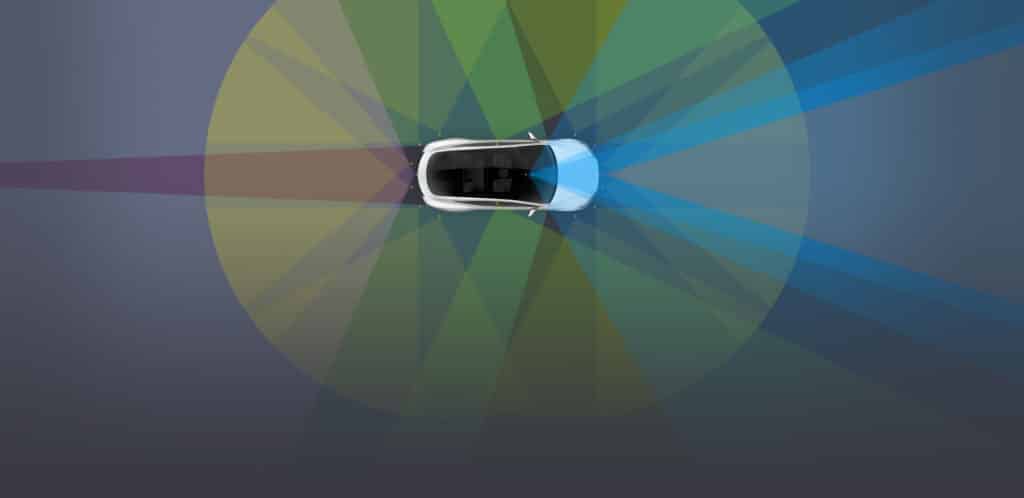
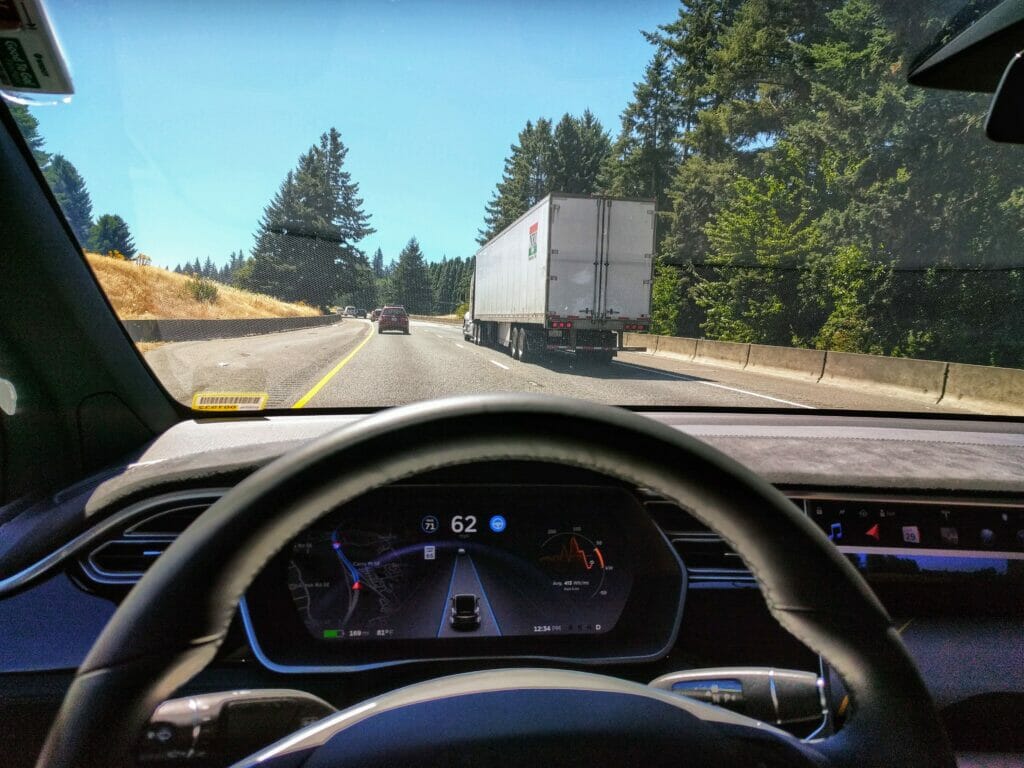
One of these is the adaptive cruise control function, which allows the car to automatically maintain a constant speed on the highway and adjust it without driver intervention, using advanced sensors integrated into the vehicle, depending on the vehicles moving ahead.
Degree of Autonomous Driving
These innovations, implemented progressively, have led the American Society of Automotive Engineers (SAE) to define a scale of 5 levels of autonomous driving, with a sixth level yet to be determined:
- Level 0: Cars without electronic driving assistance.
- Level 1: The new generation of vehicles that include automation, such as automatic emergency braking, blind spot monitoring, lane departure warning, and cruise control.
- Level 2: These cars that, thanks to a camera, activate emergency braking automatically, read lane markings, and calculate distances accurately. Under the law, the driver is responsible for the vehicle and must keep their hands on the wheel.
- Level 3: Includes autonomous overtaking; activates the turn signal, changes lanes, goes ahead, and returns to the lane. This level is already ready in China and the United States, but a legal change in Europe, which will not be resolved until 2020, limits its implementation. It is allowed to release the steering wheel in the city and in highway traffic at speeds below 60 km/h, being responsible but with new features like being able to talk on the phone, but if the driver falls asleep, the car will wake them up.
- Level 4: This is the type of car that transforms the driver into a passenger, the technology relieves them of all responsibility, allowing them to sleep, go to the back seats, etc. The first models are expected for 2021, although they are likely to be operational only in certain scenarios under supervision.
Europe Commits to Research on Autonomous Vehicles
In this context, Europe has several projects working on autonomous vehicles, such as INFRAMIX , composed of a total of 11 European companies and institutions with an investment of 4.5 million euros. It focuses on the design, updating, adaptation, and testing of physical and digital elements of road infrastructure for so-called mixed traffic.
The goal is to study the communication between cars and the road, both equipped with sensors and 5G communication antennas, to create a safe and efficient uninterrupted traffic flow, which has been tested on the AP7 highway in Girona.
Another similar project is AutLes ocits , which contributes to regulatory adaptation, addresses the links between connectivity and the automobile, and adapts infrastructures for autonomous driving. It has been implemented in Lisbon, Paris, and Madrid, where it has already been launched on the VAO lanes of the A6 highway between the roads and the entrance to the M30, with 3 cars managed by INDRA , secured by MAPFRE . At this point, it is necessary to ask some questions about the insurance that driverless cars will need.
Will Insurance Be Adapted for Autonomous Cars?
According to data from the DGT, 90% of road accidents are caused by human errors. In principle, the autonomy of the “cars of the future” could significantly reduce the loss of life quality, and consequently, the insurance premium for the autonomous car will be reduced.
Faced with a technology of this type of car, which does not establish the differences between the driver and the passenger (allowing reading, sleeping, watching a series, or any other activity for all occupants of the vehicle, including the driver), doubts arise such as: Who is responsible for any irregularity on the road? Is the car itself a victim or guilty of an accident? Where does the driver’s responsibility end and the car’s begin?
When autonomous cars are permanently established in the market, insurance companies will need to adapt their policies to the new regulations to be adopted. According to experts from the car insurance comparator Acerto.com, new parameters of liability must be established in which both the passenger, under the figure of the driver, as well as the technological equipment and the car brand are considered. Not to mention the private companies behind the mechanisms installed on highways and roads establishing connections with the cars in circulation.
Other Doubts About Autonomous Cars
In this hypothetical context of new legislation adapted to these vehicles, other unknowns have arisen, such as whether you can drive the car while intoxicated. According to a report by the car insurance comparator Acerto.com, 13.52% of Spaniards admit to having driven over the legal alcohol limit. Not to mention that over 200 people die each year on the road due to alcohol consumption.
And it is that, in addition to the inherent uncertainties of the emerging automotive technology surrounding them, we must add the still-emerging doubts about electric cars, the energy rating in which these new vehicles will be framed.
Read more on antoine-le-pilote.com