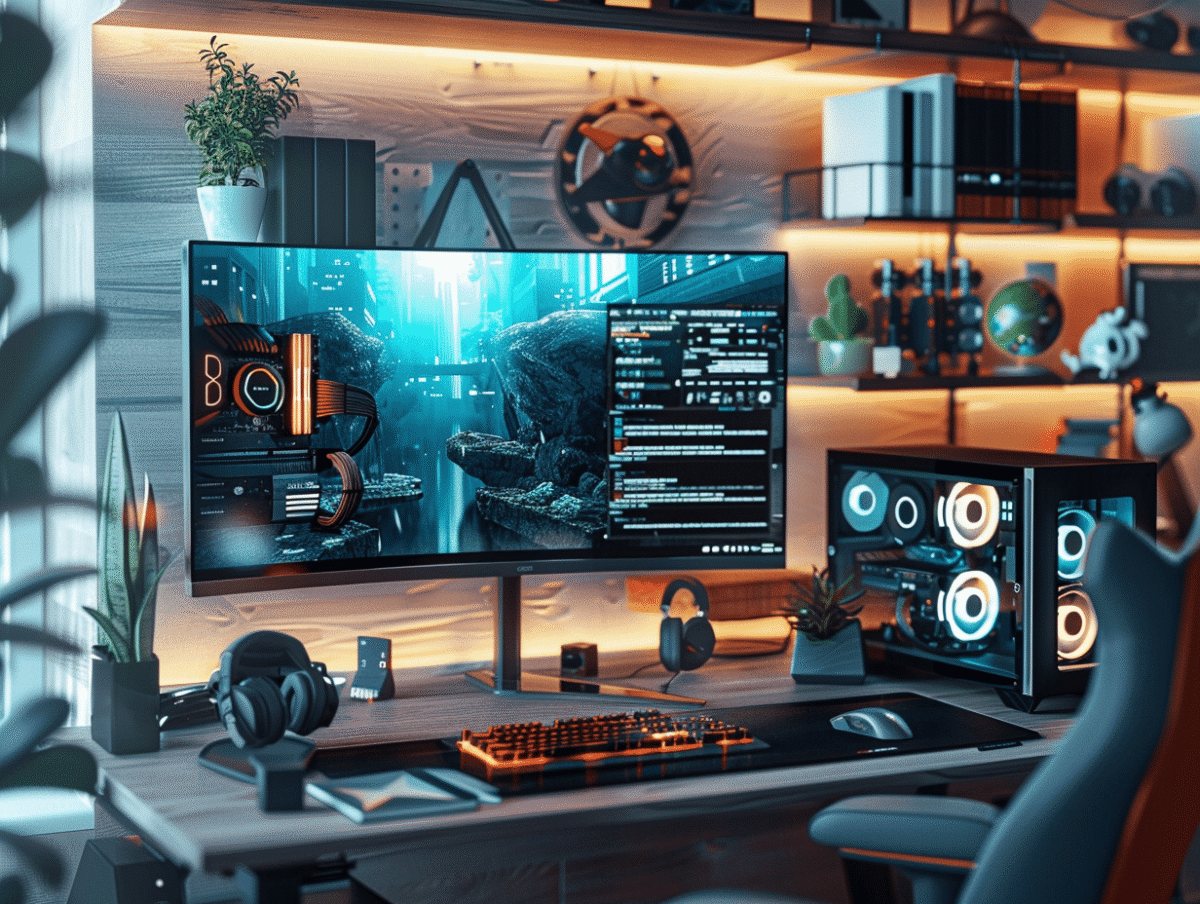
In the current era where technology is evolving at a breakneck speed, optimizing computers has become an ongoing quest for users and professionals alike. Improving PC performance is not just about cutting-edge components, but also about how these components are orchestrated. Hardware graphics scheduling proves to be a fundamental element in this technological symphony. It governs the allocation of graphic resources, ensuring smooth and efficient execution of tasks. This intelligent management is particularly essential for resource-intensive applications, such as video gaming, 3D modeling, and virtual reality.
The Essential Role of Hardware Graphics Scheduling in Improving PC Performance
Let’s break down the architecture that governs our machines and focus on hardware graphics scheduling. Indeed, modern operating systems, including Windows 10, now natively integrate hardware-accelerated graphics processor scheduling. This feature allows the GPU to autonomously manage its video memory, resulting in a significant reduction in latency and an increase in performance, especially in the demanding environment of video games.
To enable this feature on Windows 10, version 2004 or later is required. Once activated, the GPU takes over the management of graphic tasks more efficiently, which positively impacts the number of FPS (Frames Per Second), a crucial criterion for visual fluidity in games. End users thus benefit from an enhanced experience, marking a notable evolution in the field of computer hardware.
Implementing this graphics scheduling is not improvised; it requires a compatible and up-to-date GPU. Graphics card manufacturers regularly deploy driver updates to ensure optimal compatibility with the latest software advancements. These updates are a guarantee of synergy between hardware and the operating system, a synergy essential for fully leveraging the potential of graphics scheduling.
Benchmarks conducted by sources such as AdoredTV and GamersNexus have assessed the impact of this technology on performance. Although current gains in video games are not revolutionary, they pave the way for future improvements that could materialize with upcoming operating system or graphics driver updates. Hardware-accelerated GPU scheduling thus represents a promising milestone for the future of gaming and intensive video usage.
Strategies and Methods to Optimize Hardware Graphics Scheduling
In the relentless pursuit of excellence in computing performance, hardware graphics scheduling stands out as a significant technical lever. To optimize this feature, targeted strategies must be adopted. Consider the importance of regularly updating graphics card drivers, a fundamental action to maintain compatibility with the latest software optimizations offered by operating systems. Tools such as AdoredTV and GamersNexus provide valuable benchmarks that guide users towards the most performant hardware configurations.
Proactive management of system resources, particularly the amount of memory and the clock frequency of the GPU, plays a fundamental role in enhancing graphics scheduling. Fine-tuning adjustments via specialized software allow pushing the limits of hardware, thus maximizing the performance achieved. This is a form of project management applied to computer hardware, where every parameter is scrutinized and optimized to meet the growing demands of modern applications, particularly in gaming-dedicated desktop computers.
The group policy and advanced configuration of operating systems, such as the Linux kernel or Windows Server, can positively influence the management of graphic tasks. The use of virtual machines, effective disk space allocation, and optimal CPU usage contribute to a balanced system environment. This ensures that hardware graphics scheduling operates under the most favorable conditions, setting the stage for an unprecedented user experience, both in terms of performance and system stability.