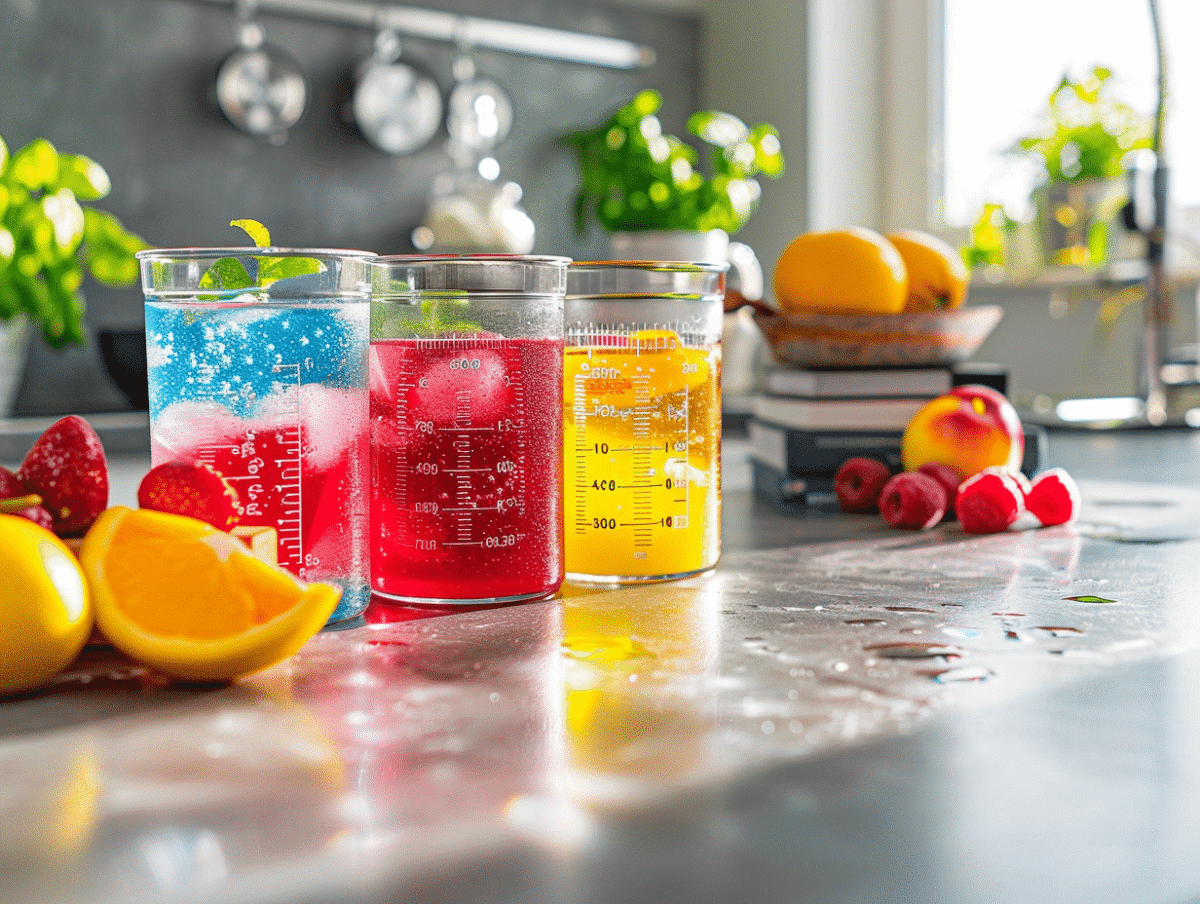
In the culinary world, as in many scientific and everyday applications, the accuracy of liquid measurements is essential. Whether preparing a delicate recipe or conducting a laboratory experiment, understanding how to convert volume units, such as milliliters and centiliters, is a fundamental skill. Often overlooked, this ability not only ensures the success of mixtures but also guarantees a deep understanding of the relationships between different units of measurement, facilitating international exchanges and the standardization of procedures.
Understanding Liquid Measurement Units: Milliliters and Centiliters
In the arsenal of volume measurement units, milliliters and centiliters hold a prominent place. The milliliter, often abbreviated as ‘ml’, represents one thousandth of a liter. It is frequently used to quantify small amounts of liquids, where precision is key. The centiliter, on the other hand, is equivalent to one hundredth of a liter and is symbolized by ‘cl’. These two units, although modest, are of great utility in various fields, ranging from gastronomy to chemistry.
The International System of Units has established these measurements to ensure global consistency and facilitate scientific as well as culinary exchanges. This system allows for the unification of measurement methods across the world and simplifies conversions. The entity ‘Centiliter’ is defined as ten times the volume of a milliliter. The reverse is equally true: one milliliter is equivalent to one-tenth of a centiliter, an essential precision for any unit conversion.
This relationship between the two units allows for quick and effortless conversions. For example, to convert 400 ml to centiliters, simply divide by ten, giving us 40 cl. This manipulation, seemingly elementary, requires a clear understanding of the proportional relationship between milliliters and centiliters.
Measuring cups and other measuring instruments take advantage of this ease of conversion. These utensils, essential in any kitchen or laboratory, are often graduated in both units to allow for precise dosing without the need for additional calculations. Culinary recipes, in particular, benefit from this duality by offering measurements in cl or ml, depending on the amount of ingredients to be incorporated. This practice results in ease of use and adaptability that pays tribute to the ingenuity and simplicity of the International System of Units.
Step-by-Step Guide to Converting Milliliters to Centiliters and Vice Versa
Volume conversion is a daily operation, especially in cooking or in the laboratory. To convert from milliliters to centiliters, the rule is simple: each centiliter represents ten milliliters. To convert a quantity expressed in milliliters to centiliters, divide by ten. Let’s take a concrete example: to convert 250 ml to centiliters, divide 250 by 10, which gives you 25 cl.
Conversely, when it comes to converting centiliters to milliliters, multiply the number of centiliters by ten. If you have a recipe that requires 5 cl of liquid, multiply 5 by 10 to get 50 ml. This manipulation is fundamental for adjusting dosages and respecting the proportions of culinary recipes, which require great precision in volume measurement.
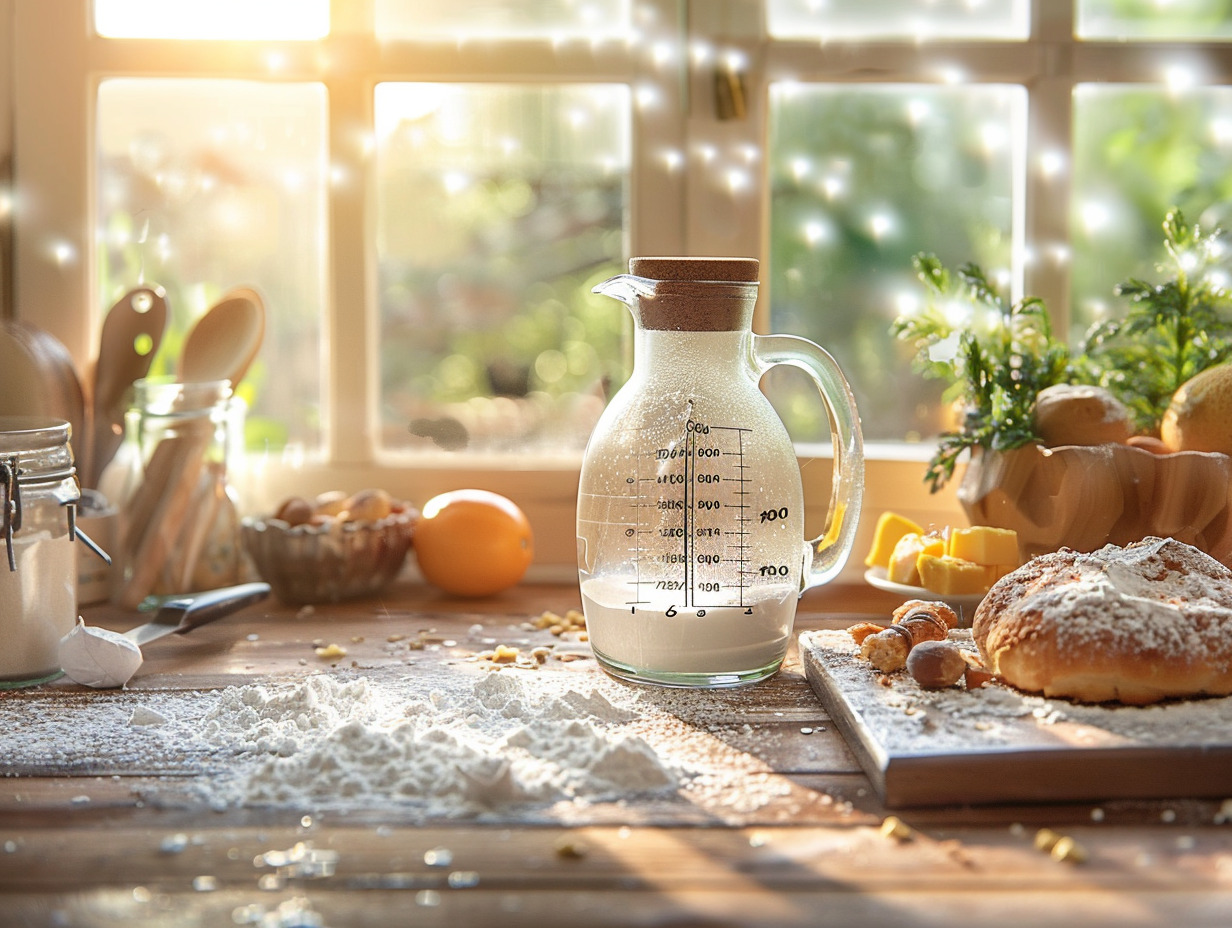
To facilitate these conversions, many measuring utensils such as measuring cups are equipped with graduations indicating both units. These markings allow for direct measurement of the necessary volume without having to perform calculations. The measuring cup thus becomes a valuable ally in recipe preparation, allowing for easy juggling between milliliters and centiliters.
For those looking to simplify the process even further, using a conversion chart can be helpful. This type of tool summarizes the equivalences between volume measurement units and offers quick reference during meal preparation. Keep in mind that precise conversion between these units is essential for success in both cooking and science, where every milliliter can make a difference.