
An inverted siphon is a pressurized pipe that passes under an obstacle (river, road, railway) before rising on the other side. Unlike a conventional gravitational flow, the fluid here circulates under pressure in a U-shaped section. This hydraulic principle, already utilized by ancient aqueducts, remains a common element of modern sanitation and irrigation networks.
Pressurized flow and differential pressure: the physical principle of the inverted siphon
In a conventional sanitation network, water flows freely due to the slope. When an obstacle prevents maintaining this slope, the inverted siphon takes over: the pipe dips under the obstacle and then rises, creating a section where water flows under pressure.
The driving force of this flow is the difference in elevation between the inlet and outlet points. The upstream water exerts hydrostatic pressure that pushes the liquid through the submerged section. Atmospheric pressure also plays a role, helping to maintain the water column in the pipe.
To better understand the inverted siphon system and its operation, it is important to note that no pump is necessary as long as the upstream hydraulic load remains greater than the downstream load, including head losses. The fluid rises “naturally” towards the outlet thanks to this pressure difference.
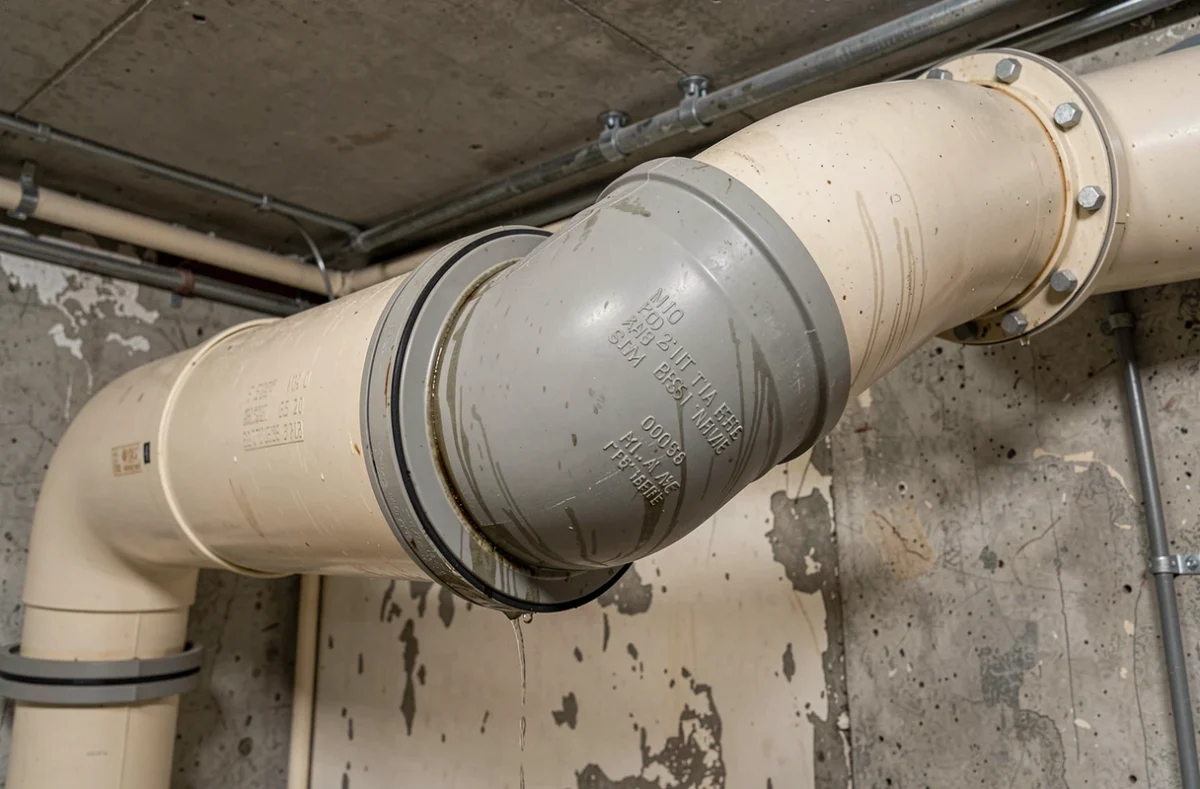
Components of an inverted siphon in a sanitation network
An inverted siphon is not just a simple U-shaped pipe. Its design includes several components that directly affect its long-term reliability.
Inlet and outlet chambers
The upstream chamber receives the gravitational flow from the network and directs it to the pressurized pipe. The downstream chamber collects the fluid that rises and returns it to the free-flowing network. These two structures also ensure the transition between the free surface regime and the pressurized regime.
Pressurized pipes and purging devices
The sizing of the pipes takes into account both peak flow and minimum flow. The flow velocity must remain sufficient to avoid the deposition of solid materials, a recurring problem in wastewater siphons. This is why purging and draining devices are planned from the design stage.
These components allow for the removal of accumulated sludge during cleaning or decommissioning. Without them, maintenance would require long and costly interruptions.
Air valves and aeration devices
A pressurized structure has high points where air can accumulate. This trapped air creates pockets that reduce the effective cross-section of the pipe and disrupt the flow. Air valves or aeration devices are therefore installed at the high points of the profile to automatically evacuate this air.
Head losses and sizing: the technical constraints to anticipate
The sizing of an inverted siphon is not limited to choosing a pipe diameter. Several parameters interact, and neglecting them compromises the operation of the structure.
- Linear head losses: these depend on the length of the pipe, its internal roughness, and the fluid velocity. The longer the pressurized section, the greater the difference in elevation between the inlet and outlet must compensate for these losses.
- Singular head losses: each bend, each change in section or connection generates an additional loss. The layout of the siphon should limit these singularities to the strict minimum.
- Self-cleaning velocity: below a certain velocity threshold, suspended solids settle in the pipe. The designer must ensure that even at low flow rates, the velocity remains sufficient to limit fouling.
- Management of trapped air: the high points of the profile must be identified and equipped to avoid any hydraulic disturbance.
In practice, some structures provide for several parallel pipes of different diameters. Low flows pass through the narrowest pipe (which maintains a correct velocity), while peak flows utilize the additional pipes.
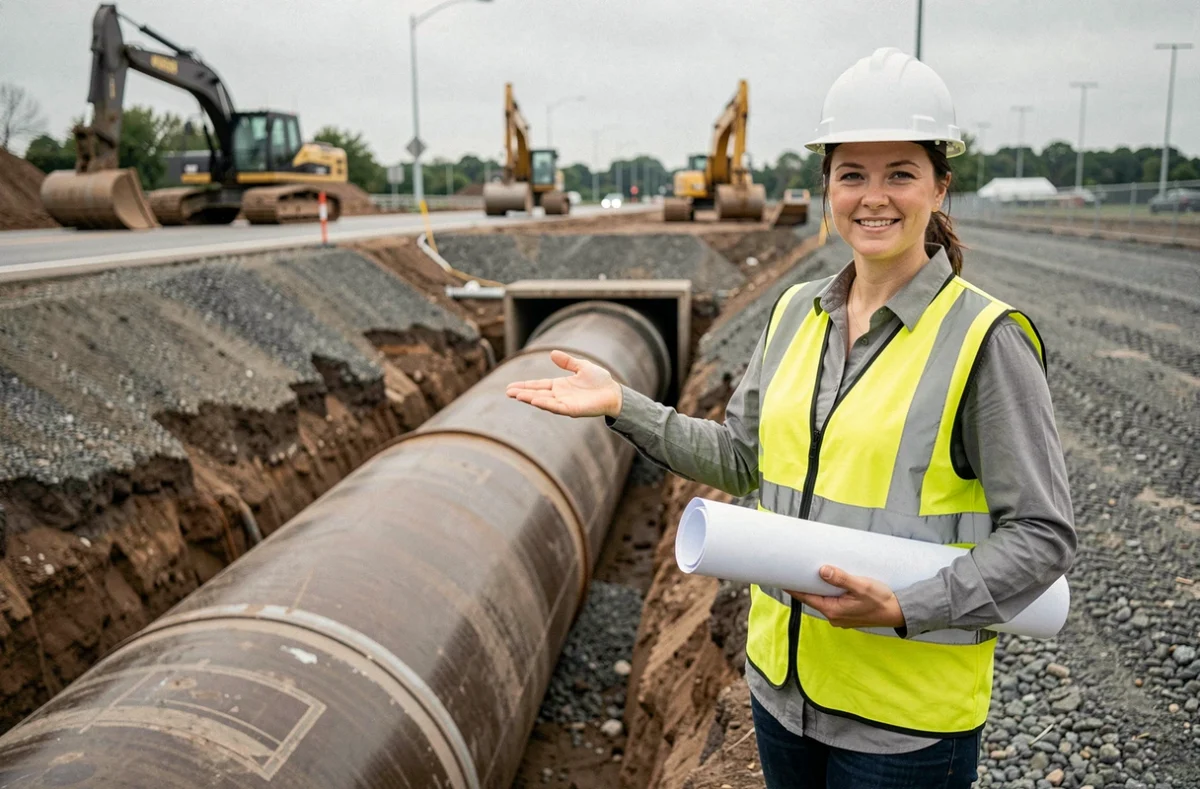
Fouling and maintenance of the inverted siphon: an underestimated issue
Fouling is not an accident. It is a direct consequence of pressurized operation when low flows do not generate enough velocity to carry away deposits. In a wastewater network, fats, sands, and organic materials gradually accumulate at the low point of the siphon.
This phenomenon reduces the effective cross-section of the pipe, increases head losses, and can ultimately lead to excessive loading of the upstream network. Therefore, the design must anticipate maintenance: access to chambers, possibility of mechanical or hydraulic cleaning, accessible draining components.
A well-designed inverted siphon integrates these operational constraints from the initial layout. The accessibility of purging components determines the durability of the structure as much as its hydraulic sizing.
Applications of the inverted siphon beyond sanitation
Wastewater networks represent the most common use, but the inverted siphon is also used in other contexts.
In irrigation, it allows water to be transported under a road or watercourse to supply plots located on the other side. The principle remains the same: the upstream load pushes the liquid through the buried section.
Historical aqueducts already used this device to cross valleys. Rather than building a high canal bridge, Roman engineers would lower the water into lead or stone pipes and then raise it on the other side of the valley using hydrostatic pressure. The principle of communicating vessels applied on a large scale.
The inverted siphon remains a demanding technical structure. Its longevity depends less on the complexity of its design than on the rigor with which maintenance constraints have been integrated from the outset.