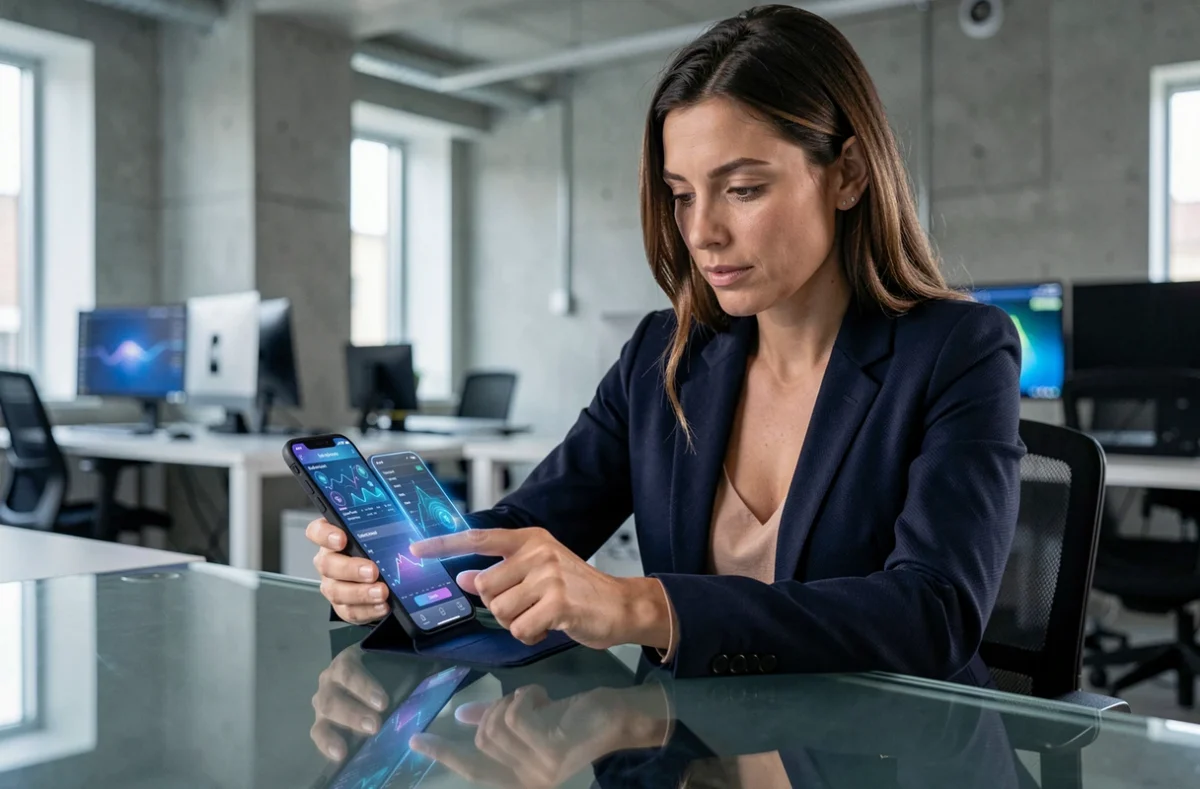
A fridge that signals an expired yogurt, a mixed reality headset that you take off after twenty minutes because it’s too heavy, a European regulation that requires AI publishers to document their training data: the technological innovations of 2024 are not just about spectacular announcements. They face concrete constraints, and it is precisely here that the sorting occurs between gadgets and sustainable advancements.
European AI Act: the regulatory constraint that redefines innovation in AI
There is much talk about generative artificial intelligence, but less about the framework that will condition its deployment in Europe. The AI Act, adopted by the European Union, classifies AI systems by level of risk: some uses are completely prohibited, while others are subject to enhanced transparency obligations.
For providers of general-purpose AI models, the text requires documenting the models, informing downstream integrators, and publishing a sufficiently detailed summary of the training data. There is also a requirement to respect copyright, a topic that causes frustration in the creative sector.
Concretely, this means that a publisher deploying a text or image generation tool in France must be able to explain what their model has been trained on. The innovations that follow on the tech section of Contre Informations show that this traceability requirement is now permeating the entire digital sector.
This regulatory shift changes the game for companies. Innovation in AI is no longer measured solely by the model’s performance, but by its documentation compliance. Startups that do not anticipate this additional layer of work risk finding themselves blocked when it comes to marketing their solutions in the European market.

Mixed reality and immersive headsets: the comfort of use problem
The launch of Apple’s Vision Pro has reignited interest in mixed reality. On paper, the technology is impressive: overlaying virtual elements on the real environment, eye tracking, gesture interface. In practice, early feedback points to a limitation that the technical sheets do not mention.
The weight and bulk of the headset cause notable fatigue after prolonged use. For mobile use or a work session lasting several hours, physical comfort remains the main barrier to adoption. We are far from the scenario where one wears a headset all day in the office.
This reality is already shaping the market. Manufacturers are working on lighter devices, better suited for education and remote work. The next generation of headsets will focus less on display resolution and more on the ability to reduce weight to an acceptable threshold for long sessions.
What this means for professional buyers
Before investing in a mixed reality headset for a team, it is recommended to test the device during sessions of at least one hour. Feedback varies on this point depending on morphology and type of use, but cervical fatigue appears in the majority of testimonials.
Generative artificial intelligence in everyday life: beyond text
Generative AI is no longer limited to ChatGPT or Midjourney. In 2024, it has infiltrated everyday objects showcased at CES in Las Vegas:
- Smartphones capable of translating a phone call in real-time into a foreign language, directly during the conversation
- Refrigerators equipped with sensors that identify foods nearing their expiration date and suggest recipes to avoid waste
- Robot vacuums equipped with vision-based navigation (cameras and sensors) that adapt their path based on detected obstacles
AI is leaving the computer screen to embed itself in consumer electronics. The difference from previous waves of home automation is that these devices learn from user habits instead of merely following predefined programs.
For marketing and training professionals, generative AI now produces video, music, and code. A trainer can generate an interactive training module in a few hours where it previously took several weeks. The time savings are real, but human verification remains necessary to avoid factual errors or biases reproduced by the model.
Personal data and cybersecurity: the invisible infrastructure of all these innovations
Each connected object, each generative AI model, each mixed reality headset relies on a layer of infrastructure that is often forgotten: computing power, data collection, cybersecurity. The proliferation of connected devices in a household or business mechanically expands the attack surface.
An intelligent refrigerator that analyzes the contents of your shelves collects data on your eating habits. A mixed reality headset records your eye movements. The question is no longer whether this data is collected, but who has access to it and how it is protected.
Concrete points of vigilance
- Check data retention policies before activating a connected object in a corporate network
- Segment the Wi-Fi network to isolate IoT devices from workstations containing sensitive data
- Ensure that the manufacturer publishes regular security updates, not just functional updates
The technological change of 2024 is as much about the visible world of transparent screens and voice assistants as it is about this layer of security and compliance. The most sustainable innovations will be those that have integrated these constraints from the design stage, not those that will treat them as a problem to be solved after launch.