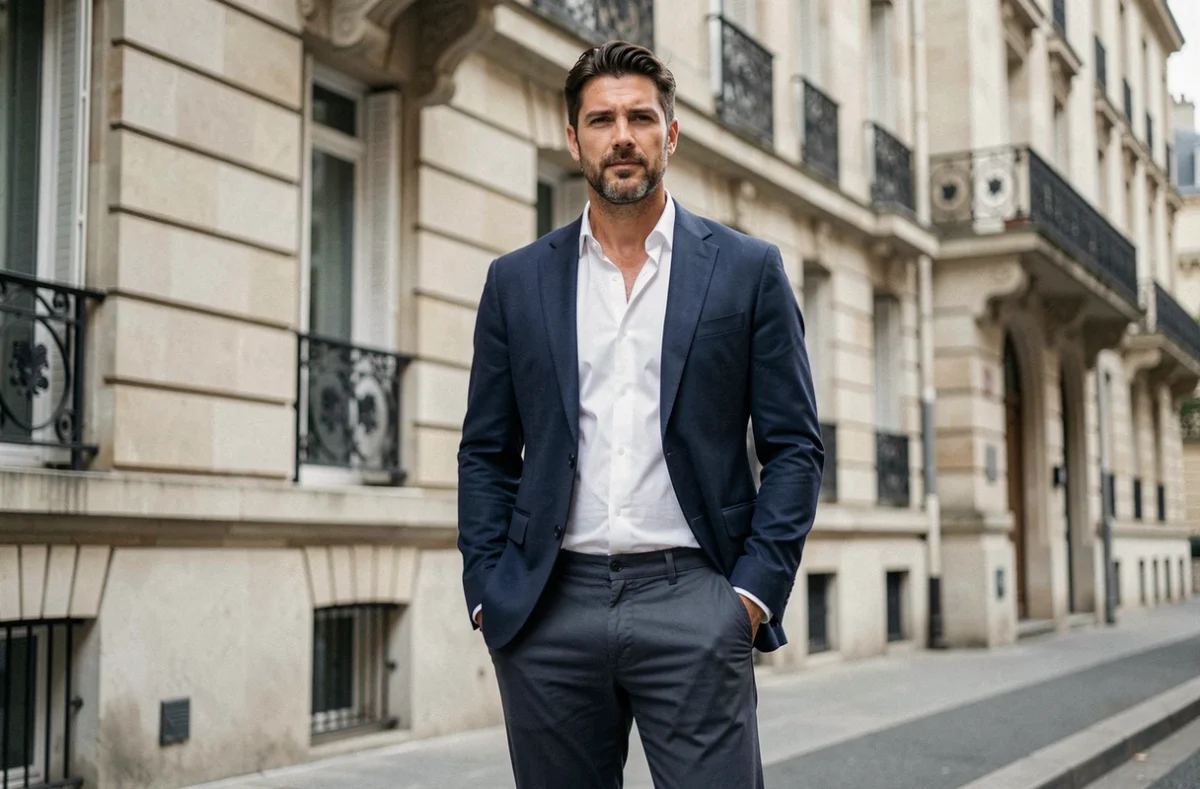
A blazer that pulls across the shoulders, a shirt with seams riding up over the biceps, trousers that squeeze the thighs as soon as you sit down: when you have a broad build, the problem isn’t finding the right size—it’s finding the right cut in that size. A broad build places specific mechanical demands on clothing, and understanding those demands is the key to creating a style that’s both comfortable and elegant.
Shoulders and chest: the two areas that determine everything else
Start with the upper body, because that’s where most fit mistakes happen. A broad-built man who buys a shirt based on his collar size often ends up with fabric stretched across his trapezius and gaping around his stomach. The reason is simple: standard patterns are designed for an average build, not a broad chest.
The first thing to check is the shoulder seam, which should sit exactly on the acromion bone. If it falls down onto the arm, the jacket looks shapeless. If it rides up toward the neck, the fabric pulls and creates fan-shaped wrinkles across the back.
This practical guide to comfortable, stylish menswear for larger men explains the point well: room in the chest comes from the garment’s construction, not from sizing up.
If you wear an L in the shoulders but have a broad torso, buying an XL means getting armholes that sit too low and excess fabric at the sides. You gain volume, not comfort. The solution is to look for cuts designed for broader builds or have a tailor make targeted alterations (taking in the sides of a shirt rarely costs more than a few euros).

Fabrics and stretch: comfort is decided by touch, not the label
A stiff fabric on a broad build resists every movement. Raise your arm, bend over, sit down—it all pulls. You end up choosing loose-fitting clothes to compensate, and lose all structure.
Stretch fabric can dramatically improve comfort without changing the silhouette. Chinos with a small amount of elastane move with the thigh without clinging to it. A stretch poplin shirt keeps its crisp drape while giving your shoulders room to move.
Fabrics to look for if you have a broad build:
- Cotton blended with elastane (often just a few percent) offers a good balance of structure and flexibility, especially for shirts and chinos.
- Piqué cotton knit (like a polo shirt) follows the shape of the torso without clinging, and its weight conceals unevenness better than a fine jersey.
- Lightweight wool or linen blends for blazers: these fabrics breathe and don’t stiffen the shoulder line, unlike heavy polyester.
Be wary of fabrics that are too thin or too fluid on the upper body. Lightweight jersey can cling to your stomach as soon as you sit down. For trousers, however, a fluid fabric gives your thighs room and makes your legs look longer.
Colors and visual proportions for a well-defined silhouette
Dark colors on the upper body aren’t a cliché—they’re an optical effect. A solid dark shade (navy, charcoal, deep burgundy) reduces the contrast between the volume of your torso and your arms, creating a more unified silhouette. You don’t have to wear black from head to toe: a dark top paired with a slightly lighter bottom creates a natural vertical line.
What matters more than color is the proportion between your top and bottom halves. A broad-shouldered man wearing slim-fit trousers creates an unbalanced inverted triangle. Straight-leg or slightly tapered trousers balance the silhouette without adding bulk.
Details that change the way an outfit looks
The shirt collar plays a more important role than many people realize. A narrow collar looks cramped on a broad neck. A spread (cutaway) or Italian collar opens up the face and balances the chest. It’s a small detail, but it changes how the entire outfit looks.
Fine vertical stripes work, as long as they’re subtle. Wide or high-contrast stripes draw attention to the width of the fabric. Tone-on-tone stripes, on the other hand, create a lengthening effect without drawing the eye.
Formalwear for a broad build: the blazer as the centerpiece
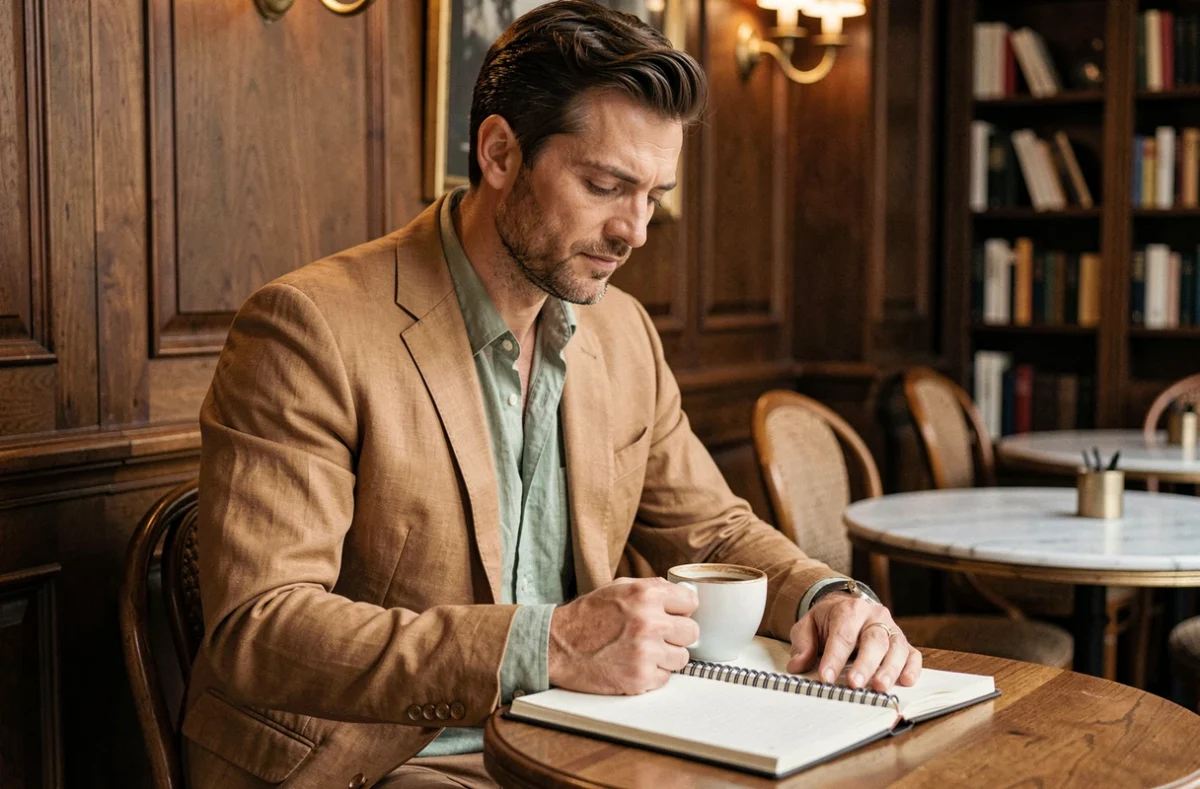
A structured blazer is probably the most useful piece for a broad-built man. It defines the shoulders without making them look wider, shapes the waist, and creates a clean vertical line with its lapels and buttons.
For it to do its job, three criteria are non-negotiable:
- The length should cover your seat without reaching halfway down your thighs, which makes your silhouette look shorter.
- The jacket should button without pulling. If the fabric forms an X around the button, it’s too tight across the chest.
- The armholes should be high enough to let you raise your arms without the whole jacket riding up.
An unlined or half-lined wool blazer stays comfortable even after several hours of wear. A full synthetic lining traps heat and restricts movement, often making you want to take the jacket off during the day.
Pairing trousers with a blazer
Straight-leg stretch cotton chinos work well for smart-casual occasions. For a full suit, pleated trousers give your thighs and hips more room than flat-front trousers while still looking polished. Avoid very tapered cuts, which emphasize the contrast with the volume of your upper body.
When you have a broad build, your clothes should neither hide nor squeeze your body. They should work with it. A well-cut garment on a broad build looks better than a trendy garment on a hanger. The key is to test each piece in motion (sit down, raise your arms, walk) before deciding to buy it.